




.webp)


.webp)





.webp)
.png)
Gold - Best Technology 2025
.webp)
Project Management Solution of the Year
.webp)
Image Processing Solution of the Year

Achievement in Management, Computer Software

CEO - Maverick of the Year in Business Services
.webp)
Property Management Solution of the Year
.webp)
SILVER for Customer Service Department of the Year

Residential Data Management Platform of the Year

Security Innovation of the Year 2023

PLATINUM Best Video Management Solution – Smart Surveillance/Remote Guarding

Best Native Cloud Solution 2023
Best New Monitoring Product: Remote Guarding
PLATINUM Best Video Surveillance Solution - Smart Surveillance

GOLD for Best New Cloud Solution

GOLD Best Video Analytics Solution - Smart Surveillance
SILVER for Best New AI/ML Solution
GOLD Best Video Data Storage Solution - Smart Surveillance
GOLD Best Cloud Computing & Storage - Smart Surveillance/Remote Guarding
GOLD for Achievement in Sales & Revenue Generation
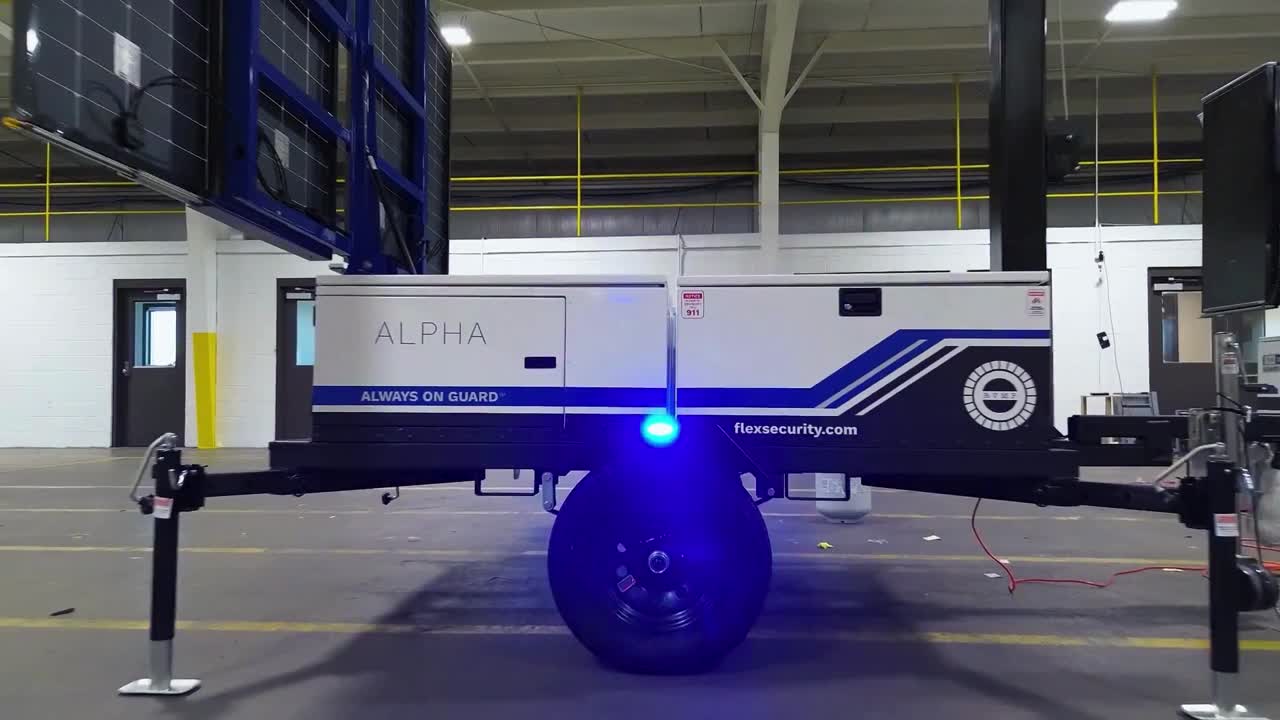
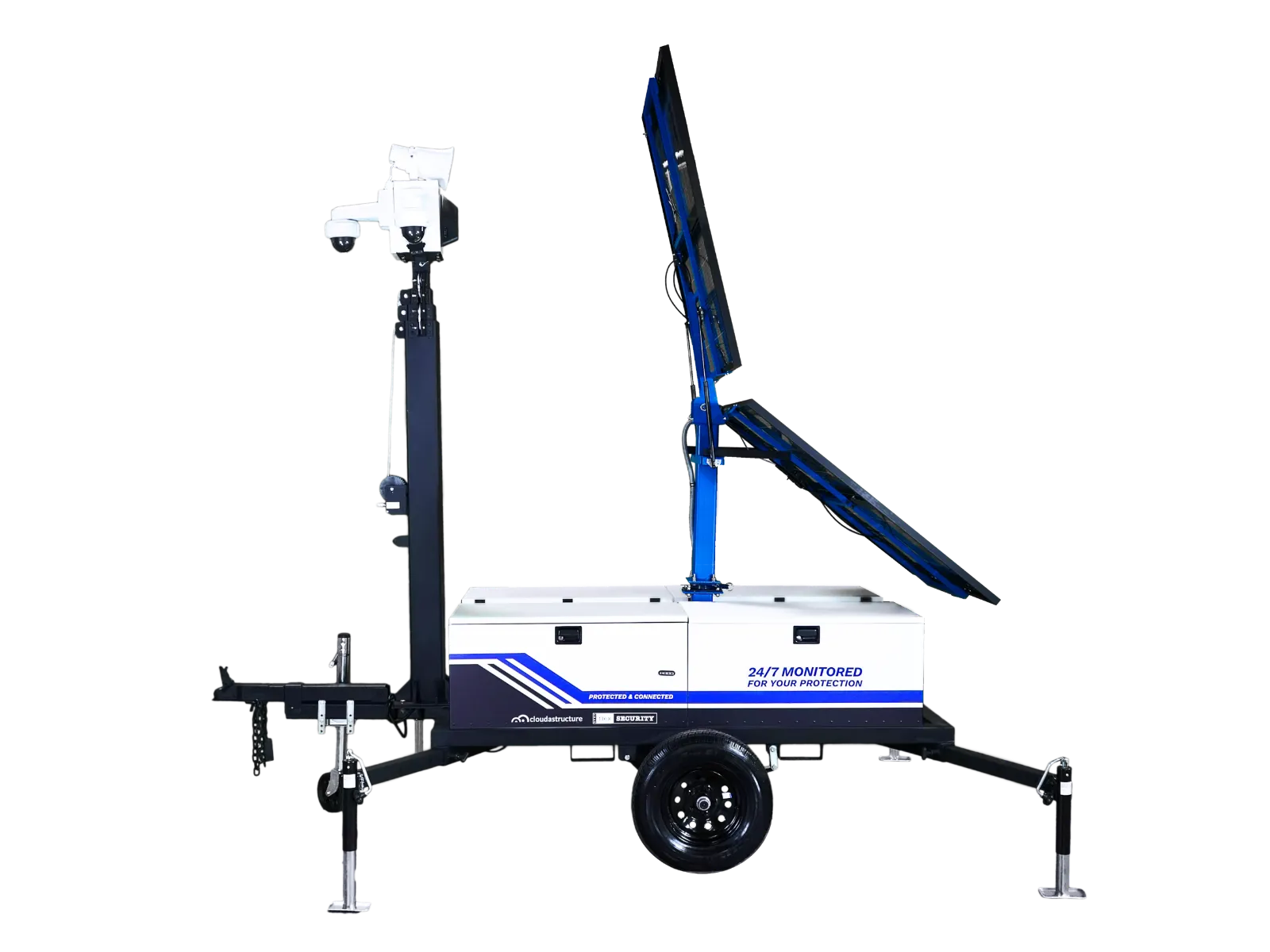
A mobile surveillance trailer is a self-contained, rapidly deployable security platform designed to provide high-level monitoring in areas without existing infrastructure. These units (often referred to as Mobile Surveillance Units (MSUs), mobile trailers, mobile video trailers, or video surveillance trailers) combine cameras, power, and connectivity into a single towable chassis. The core components include a mast, a power system, cameras that are powered by AI, and connectivity to a network. Mobile surveillance trailers provide intruder deterrence capabilities with a visible presence and talk-downs (also known as voice-downs). Coudastructure’s video surveillance trailers can be deployed on sites without existing or with unfinished infrastructure, such as construction sites, retail parking lots, events and festivals, solar farms, or rural areas with limited power.
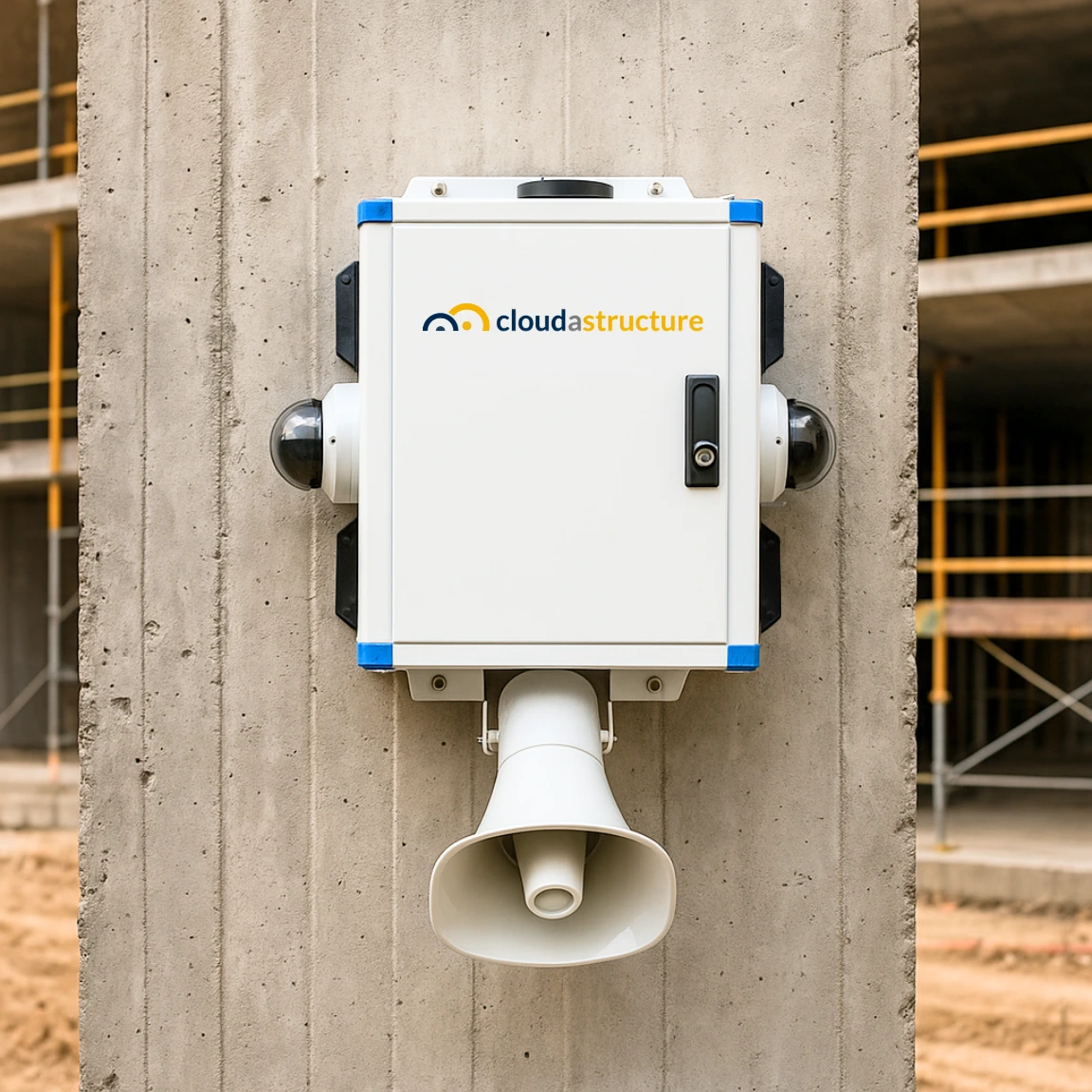
A surveillance enclosure is a protective housing designed to shield security cameras and their internal electronics from environmental hazards (like rain, snow, and dust), physical tampering, and extreme temperatures. These enclosures allow sensitive equipment to function reliably in locations where standard unprotected hardware would otherwise fail.
Cloudastructure's surveillance enclosures can be used on sites with limited walls or finished infrastructure, such as open-air trucking lots, shipping yards, or retail parking lots. Cloudastructure's enclosures have solar and powered options, depending on the needs of the site.
Solar enclosures are built around a NEMA 3 5052 weatherproof aluminum housing and include two 200-watt solar panels paired with a 200Ah LiFePO4 battery — a lithium iron phosphate battery chemistry chosen for its long cycle life, thermal stability, and reliable performance in extreme temperatures. Power is distributed through an agnostic 4-port PoE switch delivering up to 30 watts per port, supporting up to four cameras per enclosure. Deployment requires 30 feet of solar PV wire and uses universal mounting brackets for both the enclosure and the solar panels, allowing installation on poles, walls, fences, or standalone structures with minimal site preparation.
Choosing a mobile surveillance trailer over a fixed enclosure depends on several operational factors, including infrastructure availability, mission duration, and the need for a visible deterrent.
- For project duration that is temporary (up to a few months), choose the mobile trailer. For project duration that is more permanent (more than a few months or years), choose the surveillance enclosure.
- Where site infrastructure does not exist or is unreliable, or where site layout is shifting or unpredictable, choose the mobile trailer. Where site infrastructure has established power and wi-fi, or where site layout is static and well-mapped, choose the surveillance enclosure.
- For flexibility, choose the mobile trailer. For consistent observation of fixed points, choose the surveillance enclosure.
Cloudastructure’s Sales team can advise you on the best mobile surveillance fixture for your needs based on your situation and what we’ve seen work best for our clients in the past.
For sites that require License Plate Recognition (LPR) capabilities to spot authorized vehicles or trucks, Cloudastructure offers pedestals that can accommodate both trucking and private vehicle height recognition. These pedestals can also recognize Department of Transportation numbers (DOT numbers) for the trucking fleet, as well as trailer numbers entering the lot. The pedestals are 6’-10’ in height with allowance for multiple cameras that eliminate blind spots and use AI surveillance to detect information that is needed for vehicle ingress/egress authorization or reporting. The pedestals are typically positioned at the entry or exit point of a site and can include a keypad if integrated with your gate automation system.
Cloudastructure’s mobile surveillance trailers are designed for off-grid independence, utilizing a combination of renewable generation, high-capacity storage, and backup systems to ensure 24/7 uptime. Solar power is the standard primary energy source for these units. The energy storage battery bank system determines a trailer's "autonomy," or how many days it can run without a recharge. Cloudastructure’s solutions offer a hybrid backup power source, which performs best in environments with consistent cloud cover or high power demands. Cloudastructure’s trailer’s internal propane generator takes over when batteries hit a low threshold.
With four 220W solar panels providing 880W of total power and three 200Ah lithium storage batteries and a backup generator, Cloudastructure’s video surveillance trailer is well-equipped to withstand weather conditions with significant autonomy to power AI surveillance for customers.
Cloudastructure’s AI video surveillance efficiency is as critical as the power source itself. By processing person and vehicle detection locally on the unit (“on the edge” or “edge AI”) rather than in the cloud, trailers significantly reduce the power used for constant high-bandwidth data transmission. When a specific threat (like a human intruder) is detected, Cloudastructure’s AI video surveillance records their actions. When combined with Cloudastructure’s Remote Guarding alerts and activation of “talk-downs” can stop intruders in their tracks, but can require more power than passive recording.
Powering Cloudastructure’s surveillance enclosure involves more than just providing electricity to the camera; the power supply must also account for internal accessories like heaters, fans, and communication hardware. The primary power options for these enclosures include:
- Power over Ethernet (PoE), which delivers both data and power over a signal cable, or hi-PoE to account for environmental controls.
- Standard 24V AC power from direct electrical wiring, which provides consistent, high-wattage power that is not limited by the distance constraints of Ethernet cabling.
- Solar, for remote areas where trenching wires is cost-prohibitive. This setup requires a solar panel array, a charge controller, and a battery bank.
- Battery backup (UPS - Uninterrupted Power Supply), which prevents security gaps during a power outage.
The standard time that Cloudastructure’s mobile surveillance trailer powered by solar can operate without any sunlight (often referred to as its "autonomy”) typically ranges from 3 to 5 days. In high-capacity systems like Cloudastructure’s this time period can be extended to nearly a week depending on the power draw of the integrated hardware.
Hybrid power backups are a feature in Cloudastructure’s mobile surveillance trailers, designed for regions with persistent cloud cover or high power requirements. These systems ensure the unit remains operational when solar generation is insufficient to charge the battery bank. The fuel-efficient propane generator acts as a failsafe for the battery system. Propane as a fuel option is preferred for long-term remote deployment because it does not degrade over time like gasoline.
Cloudastructure’s mobile surveillance trailers are engineered with specialized hardware and structural reinforcements to remain operational during high winds, freezing temperatures, and intense heat.
- Typical wind load ratings for professional masts are between 60 mph and 100 mph. Algorithms are used to digitally remove “camera shake” caused by swaying and reducing false motion alerts.
- Freezing temperatures necessitate built-in internal heaters to keep sensitive AI processors and batteries within their safe operating temperature range. And solar panels are mounted at steep angles to encourage snow to slide off, preventing the "blanketing" effect that can stop all power generation.
- Intense heat can lead to hardware failure or shortened battery life. It is encouraged to put surveillance equipment near a climate-controlled environment like a shed or a guard shack enclosures to dissipate the warmth generated by high-definition cameras and cellular modems. “Bullet” style camera housing provides shade and reduces the direct thermal load on the camera lens and sensor.
- Sturdy materials and thoughtful design protect mobile trailers from environmental hazards like torrential rain, dust storms, or sea spray corrosion.
The mast height for Cloudastructure’s mobile trailer starts at 27 feet (a typical mast range for a surveillance trailer is between 20 and 30 feet). The specific height of the telescoping pole is chosen to balance visibility, detection accuracy, and structural stability. The vantage point is high to reduce blind spots while maintaining a manageable center of gravity, and to maximize high-accuracy AI person detection viewing angle. The height also keeps hardware out of reach of casual tampering on a remote site. Higher masts are particularly beneficial for achieving 360° coverage and ensuring that the cameras can see over obstacles like parked vehicles or construction materials.
Cloudastructure’s mobile surveillance trailers feature a multi-camera array on the mast, combining several fixed wide-angle cameras with at least one high-powered Pan-Tilt-Zoom (PTZ) unit to maximize situational awareness. This hybrid configuration allows the unit to maintain continuous wide-area oversight while simultaneously zooming in on specific threats. Multiple wide angle cameras ensure there are no blind spots around the unit. PTZ cameras allow Cloudastructure’s Remote Guards to pan across the site, tilt the lens vertically, and zoom in on details like license plates or faces. Site design is an important factor in reducing and eliminating blind spots in the area secured by the mobile surveillance trailers. Dedicated cameras with capabilities like License Plate Recognition (LPR) are needed to cover a specific area of the site where a vehicle enters or exits the lot.
Cloudastructure’s mobile surveillance trailers are equipped with audio and talk-down speakers. These systems allow for communication in industrial and commercial environments. Cloudastructure’s Remote Guards can warn trespassers that they are being monitored and to leave the premises immediately. The Remote Guards can employ built-in sirens and distinctive alarm tones for emergency warning situations. Microphones and speakers are remotely controlled by the Remote Guards, allowing for an immediate auditory response to detected threats without needing personnel on-site. The trailers are also equipped with strobe lights and strobe lights for heightened security.
Whether a single mobile trailer by Cloudastructure can cover an entire site depends on the total acreage, parcel shape and design, the height of the mast, and the type of cameras installed. Complex sites may require multiple units to eliminate blind spots. These are factors that matter:
- The vantage of the mast determines the footprint of coverage, and it interplays with the camera zoom capabilities. The vertical advantage of a 30-foot mast allows cameras to see over obstacles like parked cars, storage containers, and construction materials. A high-definition camera will have a longer reach around the installation point.
- The camera configuration determines site coverage with minimal gaps. Cameras with overlapping angle views or panoramic views ensure a reduction in coverage gaps. PTZ cameras can be zoomed in by operators to focus on high-value equipment areas farther away.
Cloudastructure’s Sales team and Solution Engineers can advise you on the best configuration. Consider multiple units when dealing with large acreage, line-of-site obstructions around fixed structures, and complex perimeters like L-shapes or fenced-off zones. Placing units near high-value assets like expensive equipment or fuel tanks, near primary ingress/egress points where vehicles and people enter and leave the site, or simply in the center of the lot can maximize usage of a single video surveillance trailer.
The best cellular provider for Cloudastructure’s mobile surveillance trailers depends on the specific location of the unit and the data requirements of your camera array. The industry standard involves using multi-carrier routers or specialized high-bandwidth plans to handle the uplink of high-definition video. Major carriers include Verizon as a top choice for remote or rural job sites due to its expansive 4G LTE and 5G coverage, AT&T, and T-Mobile in urban or suburban environments. Industrial routers like Peplink support Dual-SIM configurations that improve redundancy of signal (and can automatically switch between carriers) and load balancing (to split a camera stream-heavy demand onto multiple carriers to avoid exceeding throughput or data limits). These data plans must have high uplink priority marked as “Business” or “IoT” that prioritize upload over download speed, and unthrottled or unlimited data plans. Edge AI computation can relieve some of the data needs by sending less to the cloud at critical times.
Cloudastructure’s units have dual SIM capabilities to match the needs of a remote or rural site, and sites with minimal signal can consider a satellite connection like Starlink.
The latency for talk-down communication on Cloudastructure’s mobile surveillance trailer is mere seconds, depending on the network conditions. Because the mobile trailer units rely on cellular networks (4G LTE or 5G), the delay is inherent to the data's journey from the operator's device to the trailer's loudspeaker. The system can experience some jitter or increased buffering in remote areas with a weak uplink signal. This latency is still manageable for warning trespassers, especially if a “talk-down” does not expect a response from the field. For weaker signals, consider pre-recorded announcements.
Cloudastructure’s Sales team can help you evaluate your site’s needs based on cellular signal strength in the area, visual obstacles inside and outside the perimeter, and site remoteness.
Using a mobile hotspot for Cloudastructure’s mobile surveillance trailer is not recommended for professional 24/7 security applications due to significant reliability and technical limitations. A mobile hotspot is not sufficient for connectivity with high-definition video, encountering network congestion and drops. Hotspots also often have data restrictions and throttling that isn’t compatible with surveillance streaming. A better alternative for mobile surveillance trailers are industrial routers, dual-SIM capabilities on an unlimited cellular account, and CVR (Cloud Video Recorder) systems for video storage.
If Cloudastructure’s mobile surveillance trailer is deployed in an area with no cellular signal or signal that is frequently interrupted, the trailer’s core security functions—recording and detection—continue locally, but remote access and real-time alerts are disabled until a connection is restored. Without cellular signal, live viewing, instant alerts, and remote PTZ control will be unavailable until signal is restored. In deep rural areas where cellular signal is not always on, high-speed low-latency satellite internet like Starlink can be integrated to provide a high-bandwidth connection.
Cloudastructure’s mobile surveillance trailers are designed for rapid deployment and high portability, often allowing a single technician to transport and set them up quickly. Their ease of movement depends on the towing equipment used and the specific uneven terrain nature of the site. The mast should always be retracted before moving the trailer, even for short distances, as the unit can tip over.
Cloudastructure’s mobile surveillance trailers are engineered with multiple layers of physical and electronic security to deter and detect tampering, ensuring they can operate reliably in unstaffed or high-risk environments. The enclosures of the equipment inside the trailers are ruggedized with high-strength materials and protective housing, safeguarding hardware from environmental hazards and vandalism. Typical placement of mobile trailers puts them inside the perimeter of a fenced-in yard, so that the sensitive equipment is protected both by the ingress/egress policies of the location, as well as the additional surveillance cameras placed on the perimeter. Inherent in their functionality itself, the trailers are equipped to detect a trespasser and send a signal both on site and to the cloud about their identifying features.
Cloudastructure’s Sales team and Solution Engineers can advise on the evaluation of your site and for optimized suitable locations where the units can be tamper-free.
Cloudastructure’s AI Remote Guarding capabilities combine AI-powered analytics with real-time intervention capabilities. Cloudastructure does intelligent detection that learns a property’s patterns and responds immediately when something is wrong – not hours later when footage is being reviewed after the fact. Stopping crime before it starts means that our AI surveillance catches threats in real-time, and trained security professionals intervene immediately through two-way audio and strobes. You're not just recording evidence anymore; you're preventing the incident entirely.
The same way our AI remote surveillance works on cameras installed on walls, posts, and fences on a property, the mobile surveillance trailer and the enclosure employ the same award-winning AI remote guarding security capabilities.





.svg)
.svg)


.webp)
.webp)